
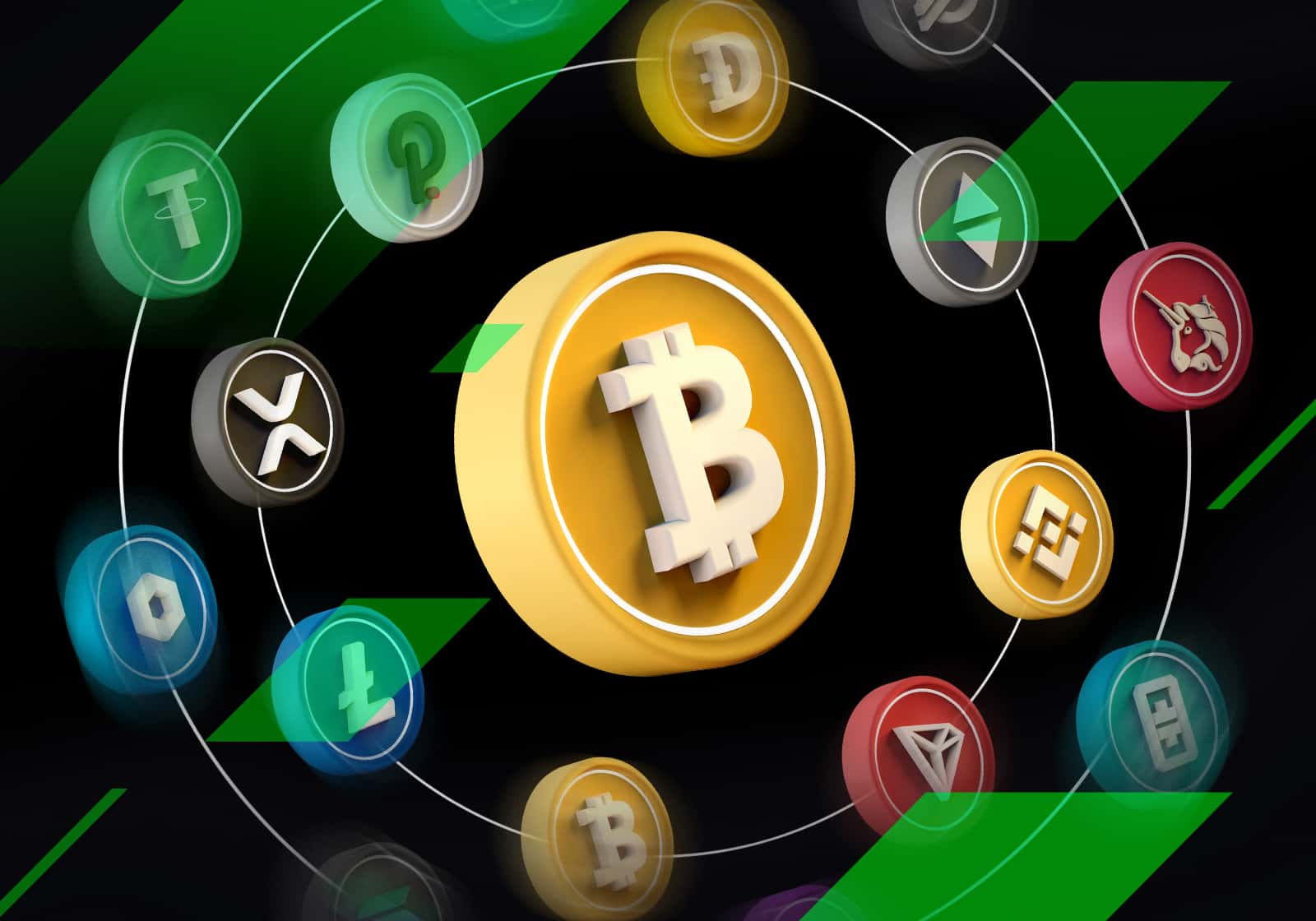
5 Best Crypto Coins to Watch in 2026: AI, DeFi, and Infrastructure Picks
The 2026 crypto landscape is shifting toward tangible utility in AI, DeFi, and infrastructure. We evaluated the top contenders to identify the most resilient assets for your watchlist.
1. Render Network GPU rendering infrastructure
Render Network transforms idle GPU power into a distributed cloud for 3D rendering and AI training. By connecting creators with GPU holders, it slashes costs compared to centralized providers like AWS. This decentralized approach ensures scalable compute resources for high-demand workloads.

2. Fetch.ai autonomous AI agent framework
Fetch.ai enables autonomous digital agents to execute complex tasks like travel booking or data analysis without human intervention. These agents negotiate and transact on-chain, creating a machine economy. As AI integration deepens, Fetch.ai’s framework offers a practical bridge between blockchain utility and intelligent automation.

3. Chainlink decentralized oracle data feeds
Chainlink acts as the critical bridge between blockchain smart contracts and real-world data. Its decentralized oracle networks provide secure, tamper-proof information feeds for price data, weather events, and sports results. Without this infrastructure, most DeFi applications would lack the reliable external data necessary for automated execution.

4. Arweave permanent decentralized data storage
Arweave offers permanent, decentralized data storage through a unique endowment model that pays for future maintenance upfront. Unlike traditional cloud storage, data remains accessible indefinitely without recurring fees, making it ideal for archival purposes and immutable record-keeping. This approach ensures long-term data preservation without reliance on centralized providers.

5. Injective Protocol high-speed DeFi trading
Injective Protocol provides a high-performance blockchain layer specifically designed for decentralized finance applications. It supports fast transaction finality and complex financial instruments like derivatives and perps without gas fees for users. This speed and efficiency make it a strong contender for traders seeking advanced DeFi capabilities.
Market context for 2026
The cryptocurrency landscape in 2026 is defined by a pivot away from speculative novelty toward tangible utility and institutional integration. Capital flows increasingly favor projects that solve actual problems in AI computation, DeFi efficiency, and blockchain infrastructure. This shift is driven by regulatory clarity and the entry of traditional finance players seeking stable, compliant exposure to digital assets.
Bitcoin (BTC) remains the foundational anchor. As the primary benchmark for the asset class, its price action often dictates broader market sentiment. Tracking the live price of Bitcoin provides immediate context for risk appetite across the sector.
Parallel to Bitcoin’s dominance, the most significant growth narrative centers on AI-integrated tokens. These projects bridge the gap between decentralized networks and the booming demand for artificial intelligence computing power. Unlike generic crypto assets, these tokens offer specific utility in data verification and computational resource allocation, making them attractive to both tech investors and crypto natives.
Simultaneously, institutional-grade infrastructure is solidifying its role. Decentralized exchanges (DEXs) and high-throughput layer-one networks are capturing market share from traditional intermediaries. For instance, Hyperliquid (HYPE), a decentralized exchange for perpetual futures, demonstrated the sector's momentum by rising 154% in the first half of 2026 alone. This performance highlights how specialized infrastructure projects are outpacing broader market averages, rewarding investors who focus on functional utility over speculative hype.
Bitcoin remains the digital gold standard
Bitcoin (BTC) continues to anchor the crypto market as the primary store of value. In 2026, it serves as the foundational holding for investors seeking risk management against traditional market volatility. Its fixed supply cap of 21 million coins ensures scarcity, distinguishing it from fiat currencies that central banks can print at will. This digital scarcity has cemented Bitcoin’s role as a hedge against inflation and currency debasement.
Institutional adoption has accelerated significantly, transforming Bitcoin from a speculative asset into a recognized component of diversified portfolios. Major financial institutions now offer Bitcoin ETFs and custody solutions, providing regulated access for traditional investors. This infrastructure reduces barriers to entry and increases liquidity, making Bitcoin more accessible to everyday investors than ever before.
The network’s security has reached unprecedented levels. With over 15 exahashes per second of mining power securing the blockchain, Bitcoin’s decentralized ledger remains the most tamper-proof financial system in history. This robust security model protects against censorship and single points of failure, offering peace of mind for long-term holders.
For those looking to secure their Bitcoin holdings, hardware wallets provide the highest level of offline protection. These devices store private keys away from internet-connected devices, shielding them from online hacks and phishing attempts.


As an Amazon Associate, we may earn from qualifying purchases.
Ethereum’s Role as the Settlement Layer
Ethereum remains the foundational settlement layer for decentralized finance (DeFi) and tokenized assets. As the second-largest cryptocurrency by market capitalization, it provides the security and decentralization that other networks often lack. This stability makes it the preferred choice for institutional players and developers building complex financial applications.
The network’s transition to proof-of-stake has significantly improved energy efficiency while maintaining robust security guarantees. This shift has attracted a wide range of enterprises looking to leverage blockchain technology without the environmental concerns associated with proof-of-work systems. The result is a more sustainable and scalable platform for high-value transactions.
Developer activity on Ethereum continues to outpace other major blockchains. This vibrant ecosystem supports a diverse array of protocols, from lending platforms to decentralized exchanges. The sheer volume of code being written and audited on Ethereum signals strong confidence in its long-term viability as the backbone of the crypto economy.
Key DeFi Protocols and Tokenized Assets
Several prominent DeFi protocols are built directly on Ethereum, leveraging its security for their operations. Aave, a leading lending and borrowing platform, allows users to earn interest on deposits or borrow assets against collateral. Uniswap, the largest decentralized exchange, facilitates token swaps without the need for a centralized intermediary. These applications demonstrate Ethereum’s utility beyond simple value transfer.
Tokenization of real-world assets (RWA) is another growing sector on the network. Companies like Ondo Finance are bringing tokenized U.S. treasuries and other traditional financial instruments onto the blockchain. This trend bridges the gap between traditional finance and crypto, offering investors access to yield-generating assets with the transparency and efficiency of blockchain technology.
The Ethereum Virtual Machine (EVM) compatibility ensures that new projects can easily deploy on the network. This interoperability has created a rich ecosystem where different applications can interact seamlessly. Developers can build upon existing standards and libraries, accelerating innovation and reducing the time to market for new financial products.
Network Stability and Future Outlook
Ethereum’s network stability is evident in its consistent uptime and resistance to major disruptions. While other chains have experienced outages or security breaches, Ethereum has maintained its integrity. This reliability is crucial for users who depend on the network for critical financial operations.
Looking ahead, ongoing upgrades such as proto-danksharding aim to further reduce transaction costs and increase throughput. These improvements will make Ethereum more accessible to everyday users and businesses. The network’s ability to evolve while maintaining its core principles positions it as a leading contender for the future of decentralized finance.
As the crypto market matures, Ethereum’s role as the settlement layer is likely to expand. Its combination of security, decentralization, and developer support creates a strong foundation for the next generation of financial applications. Investors and developers alike are watching closely to see how this ecosystem continues to grow and adapt in 2026 and beyond.
Solana: Speed for Consumer Apps and Trading
Solana has carved out a distinct niche in 2026 by prioritizing raw transaction throughput over the decentralized security models that define competitors like Ethereum. This design choice makes it the preferred infrastructure for consumer-facing applications that cannot tolerate delays. For high-frequency trading and gaming, where every millisecond counts, Solana’s high-speed transactions provide the responsiveness users expect from modern digital experiences.
The network’s architecture allows it to process thousands of transactions per second with fees that remain negligible even during peak demand. This scalability is not just a technical metric; it is the foundation for apps that require real-time interaction. When users engage with decentralized exchanges or on-chain games on Solana, they experience near-instant finality, removing the friction that often drives users away from slower blockchains.
As the ecosystem matures, developers are leveraging this speed to build complex financial instruments and social platforms that were previously impractical. The result is a vibrant landscape of high-velocity applications that rely on Solana’s performance advantages. For investors and builders in 2026, Solana represents the leading choice for projects where speed and low cost are non-negotiable requirements.
Hyperliquid decentralized exchange
Hyperliquid (HYPE) has emerged as a standout player in the 2026 crypto landscape, specifically targeting the high-volume perpetual futures market. Unlike traditional centralized exchanges that often suffer from downtime or opaque order books, Hyperliquid operates as a high-performance decentralized exchange (DEX). It leverages a custom-built L1 blockchain to deliver sub-second trade execution, bringing institutional-grade speed to on-chain trading.
The platform’s architecture is designed to solve the latency issues that have historically plagued DeFi. By running its matching engine on its own chain, Hyperliquid achieves throughput that rivals centralized giants while maintaining the self-custody benefits of decentralization. This structure allows traders to interact with deep liquidity pools without relying on third-party custodians, a critical factor for traders managing large positions.
Market data from the first half of 2026 highlights the asset's rapid adoption. According to The Motley Fool, HYPE surged 154% in the first six months of the year, driven by increasing demand for efficient perpetual trading tools. Its inclusion in major financial roundups, such as Forbes’ list of top cryptocurrencies, signals growing institutional and retail interest in its unique infrastructure.
Comparison of top 5 assets
Choosing among the best crypto coins to watch in 2026 requires understanding how each asset functions within the broader market. The following table compares Bitcoin, Ethereum, Solana, Hyperliquid, and Binance Coin based on their market capitalization, primary utility, and associated risk profile.
| Asset | Market Cap Tier | Primary Use Case | Risk Profile |
|---|---|---|---|
| Bitcoin (BTC) | Large | Store of value, digital gold | Low |
| Ethereum (ETH) | Large | Smart contracts, DeFi base layer | Low-Medium |
| Solana (SOL) | Mid | High-speed transactions, NFTs | Medium |
| Hyperliquid (HYPE) | Small | Decentralized perpetual exchange | High |
| Binance Coin (BNB) | Large | Exchange utility, BSC ecosystem | Medium |
Bitcoin and Ethereum remain the safest anchors for long-term holding, while Solana offers higher growth potential with moderate volatility. Hyperliquid represents a high-risk, high-reward play in the decentralized finance sector. Binance Coin provides utility tied directly to the Binance ecosystem, balancing stability with exchange-specific risks.
For investors seeking tangible exposure to crypto infrastructure or related hardware wallets, consider exploring recommended devices via

As an Amazon Associate, we may earn from qualifying purchases.
Frequently asked: what to check next
Which AI crypto coins are leading in 2026?
The 2026 market is dominated by tokens that integrate real-world AI infrastructure. Top launches in this sector focus on verifiable computing and privacy, moving beyond simple hype to functional utility. Projects like Render and Fetch.ai are often cited for their tangible use cases in decentralized GPU rendering and AI agent coordination.
Is now a good time to buy Bitcoin and Solana?
Bitcoin and Solana are currently trading below recent highs, presenting entry points for long-term holders. While Bitcoin offers stability as a digital store of value, Solana provides high-speed infrastructure for decentralized applications. Both assets are considered foundational to a diversified 2026 portfolio.
What are the best crypto coins for DeFi and infrastructure?
Beyond AI, the DeFi and infrastructure sectors are seeing renewed interest in cross-chain interoperability and real-world asset tokenization. Hyperliquid has emerged as a key player in high-performance decentralized trading, while protocols focusing on cross-chain bridges are essential for navigating the fragmented 2026 landscape. These infrastructure picks provide the backbone for broader market growth.
No comments yet. Be the first to share your thoughts!