
5 High-Yield Crypto Staking Opportunities in 2026
Navigating the 2026 crypto landscape requires identifying High-Yield Crypto Staking Opportunities backed by verified protocol data rather than speculative hype. This roundup highlights five concrete staking products with transparent, official yield metrics to help you allocate capital with precision.
-
Ethereum Liquid Staking via Lido
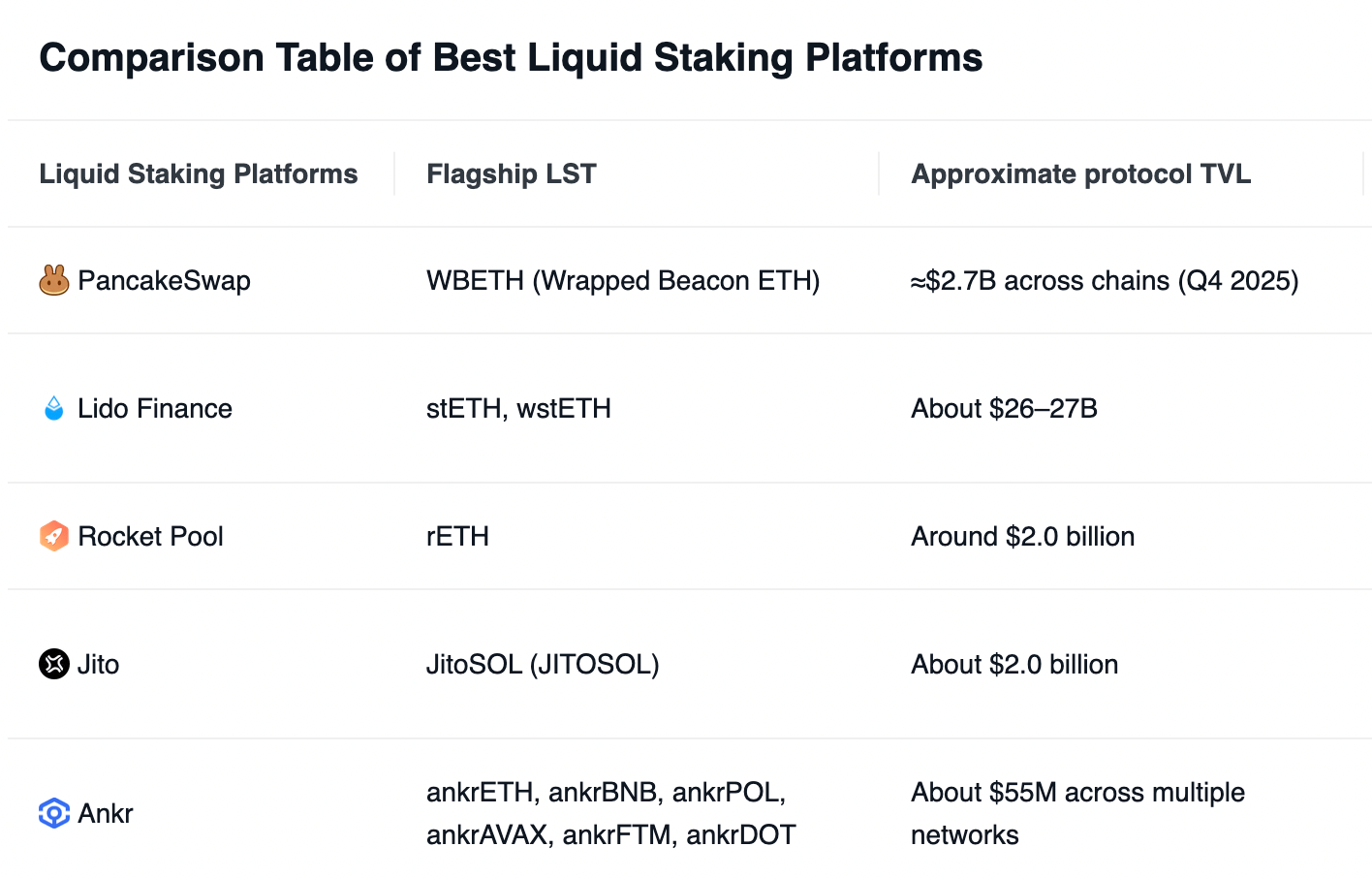
Lido lets you stake ETH without locking it away, issuing stETH tokens that retain liquidity. This approach captures Ethereum’s network rewards while keeping capital flexible for DeFi strategies. The trade-off involves smart contract risk and a slight yield discount compared to solo staking. Use the official Lido documentation to understand the validator distribution and fee structure before committing funds. -
Solana Delegated Staking on Solflare
Solflare offers a seamless interface for delegating SOL to high-performing validators on the Solana network. Users earn staking rewards directly into their wallet without complex technical setups. The platform supports easy validator switching if performance drops, ensuring optimal yield. Always verify validator commission rates and uptime history to maximize your passive income potential in 2026. -

Cardano Native Staking Pools
Cardano’s Ouroboros protocol allows ADA holders to delegate stake to pools without locking tokens. You retain full ownership of your assets while earning rewards based on pool performance and pledge. The native wallet interface simplifies pool selection by displaying key metrics like saturation levels and margin fees. Choose active pools to contribute to network decentralization and secure consistent returns. -
Cosmos Hub Interchain Security Staking
Cosmos Hub enables staking that secures not just the central chain but also interconnected zones via Interchain Security. Your ATOM stake contributes to a shared security model, potentially enhancing network resilience. This mechanism diversifies risk across multiple applications while maintaining your primary yield source. Review the official Cosmos governance proposals to understand how new zones are added and secured by existing stakers. -
Polkadot Nominated Proof of Stake
Polkadot’s NPoS system allows DOT holders to nominate validators and secure the relay chain. You earn rewards based on the validator’s performance and the total stake delegated. This method offers high security and participation in governance without running infrastructure. Select validators with consistent block production records to ensure stable yields and contribute to the robustness of the Polkadot ecosystem in 2026.
How to pick safe staking rewards
Choosing the right staking opportunity requires looking beyond the headline percentage. In 2026, the best staking option is rarely the one with the highest APY; it is the one that offers the best balance of rewards, safety, lockup terms, fees, and liquidity. High yields often signal higher protocol risk or longer lockup periods that can trap your capital during market downturns.
Start by evaluating the protocol’s security posture. Look for independent audits from reputable firms and check if the project has a bug bounty program. A high APY on an unaudited or new protocol is not a reward; it is a gamble with your principal. Security should always take precedence over yield in high-stakes finance.
Next, examine the tokenomics. Sustainable staking rewards come from genuine network activity or inflation schedules that do not dilute holders excessively. If the only way to maintain high yields is to constantly sell rewards to pay validators, the token price may drop faster than your staking gains accumulate. Always read the whitepaper to understand where the yield actually comes from.
Finally, consider the flexibility of your stake. Some protocols allow unstaking at any time, while others require you to lock funds for months. In volatile markets, liquidity is valuable. A slightly lower APY with immediate access to your funds may be safer than a high yield that locks your capital for six months.



As an Amazon Associate, we may earn from qualifying purchases.
Understanding APY and lockup terms
Staking rewards are expressed as an annual percentage yield (APY), which tells you how much your stake grows over a year if you leave it untouched. This figure compounds the base reward rate with the effect of reinvesting earnings, giving a more accurate picture of potential income than simple interest. Yields vary widely across networks, ranging from 3% to 18% APY depending on the asset and current market conditions [[src-serp-5]].
While higher APYs are tempting, they often come with longer lockup periods. When you stake, you commit your coins to the network to help secure it. During this time, your assets are illiquid and cannot be sold or transferred. This trade-off between yield and accessibility is critical: a 15% APY sounds attractive, but if your funds are locked for six months, you miss out on potential opportunities or need to sell at a loss if you need cash.
Some platforms offer flexible staking with no lockup, allowing you to unstake at any time, though these typically offer lower rates. Others, like Ethereum’s native proof-of-stake, require validators to lock up significant amounts (32 ETH) for extended periods to maintain security. Understanding these terms helps you balance risk and reward, ensuring your staking strategy aligns with your liquidity needs.
Security risks in crypto staking
Staking offers attractive yields, but it also exposes your capital to distinct technical and institutional threats. Understanding these vulnerabilities is essential before allocating funds to high-yield opportunities.
Slashing penalties occur when a validator node fails to perform its duties or acts maliciously. Network protocols penalize this behavior by confiscating a portion of the staked assets. This risk is inherent to the consensus mechanism and cannot be avoided by choosing a specific platform, though reputable operators often provide insurance or safeguards to mitigate potential losses.
Platform insolvency poses a significant threat to custodial staking services. When you stake through an exchange like Coinbase or Binance, you are entrusting your keys to a third party. If the platform experiences financial distress or regulatory action, your staked assets may be frozen or lost, regardless of the underlying blockchain's health. This was evident during the collapse of several major crypto lenders, where user deposits vanished despite the assets being technically sound on-chain.
Smart contract vulnerabilities are a persistent danger in DeFi staking protocols. Even if the base layer is secure, the code governing the staking pool can contain bugs or exploits. Hackers frequently target these contracts to drain liquidity. Always verify that a protocol has undergone independent security audits from recognized firms before depositing funds.
Frequently asked: what to check next
Is crypto staking safe for beginners? Staking safety depends on the platform. Custodial options like Coinbase simplify the process with clear eligibility rules, making them suitable for U.S. users who want straightforward management. However, you trade some control for convenience. Always verify that the platform uses official, audited protocols to secure your assets.
How are staking rewards taxed? In the U.S., staking rewards are generally treated as ordinary income at the fair market value when received. This applies whether you stake through a centralized exchange or a DeFi protocol. Keep detailed records of the date and value of each reward to calculate your cost basis accurately if you later sell the tokens.
Can I stake without locking up my funds? Yes, many platforms offer flexible staking where you can withdraw your assets at any time. While these options provide liquidity, they often come with lower annual percentage yields (APY) compared to locked staking. Check the specific terms of each coin, as Ethereum or Solana staking may have different unstaking periods depending on the network conditions.
No comments yet. Be the first to share your thoughts!