
Assess your 2026 exposure risk
Quantifying your specific risk requires looking beyond headline prices to the underlying correlation between crypto assets and traditional markets. As of May 2026, the global crypto market capitalization stands at approximately $2.57 trillion, reflecting a 5.57% decline over the past week CoinDCX. This contraction highlights a critical shift: Bitcoin is now showing a strong 69% correlation with Gold, indicating that inflation dynamics are driving volatility just as much as speculative sentiment.
This correlation extends to equities as well. On February 5, 2026, Bitcoin experienced its largest single-day drop since November 2022, mirroring a broad selloff in tech shares and volatility in precious metals WISHNews8. When the broader stock market corrects, Bitcoin rarely acts as an uncorrelated hedge; instead, it tends to fall in tandem with risk assets. If your portfolio holds significant exposure to both tech stocks and crypto, your downside risk is compounded rather than diversified.
To assess your actual exposure, calculate the percentage of your total net worth tied to these correlated assets. A portfolio that is 40% crypto and 30% tech-heavy equities faces a much steeper drawdown during a systemic crash than one with balanced allocations to fixed income or cash equivalents. Understanding this overlap is the first step in building a defense.
Move funds to regulated stablecoins
When Bitcoin and Ether plummet, the only way to preserve capital is to exit volatile positions immediately. The goal is not to profit from the decline but to stop the bleeding. Converting your holdings into regulated stablecoins like USDC (USD Coin) provides a dollar-pegged refuge while you wait for the market to stabilize.
USDC is issued by Circle, a regulated financial institution that publishes monthly attestation reports on its reserve holdings. Unlike unregulated or offshore stablecoins, USDC is held in cash and short-term U.S. Treasury bills, ensuring it remains redeemable at $1.00 per token even during extreme volatility. This regulatory transparency is your primary shield against counterparty risk when exchanges are under stress.
Before initiating any trades, ensure your exchange account is fully verified and secured with two-factor authentication (2FA). During a crash, liquidity dries up and trading volumes spike. If your account is locked or requires additional verification mid-sell, you may miss the optimal exit window. Log in early and confirm your identity status.
Locate the direct trading pair for your asset against USDC, such as BTC/USDC or ETH/USDC. Avoid pairs that use fiat currencies like USD or EUR directly if the exchange offers USDC, as stablecoin pairs often have tighter spreads and faster settlement times. Check the order book depth to ensure there is enough liquidity to execute your full position size without severe slippage.
Do not use limit orders during a rapid crash; prices may gap below your target before your order fills. Place a market sell order to liquidate your volatile assets immediately at the best available current price. The priority is capital preservation, not price perfection. Accept the slight slippage as the cost of insurance against further downside.
Once the trade executes, confirm that the USDC balance appears in your exchange wallet. Do not immediately withdraw to an external wallet unless you are moving funds to a cold storage solution. Keeping the assets on the exchange allows you to quickly re-enter the market if a short-term bounce occurs, or to withdraw to a bank account if you wish to exit the crypto ecosystem entirely.
This process effectively hedges your portfolio by converting high-beta assets into a low-volatility store of value. By sticking to regulated issuers like Circle, you avoid the risk of a stablecoin de-pegging, which has occurred with other assets during previous market crises. Stay vigilant and monitor the USDC reserve reports to ensure the peg holds as the market conditions evolve.
Compare stablecoin safety profiles
When the market turns, not all stablecoins hold their peg. In a 2026 crash scenario, the difference between a 1:1 redemption and a liquidity freeze determines whether your capital survives or vanishes. You must evaluate reserve transparency and regulatory status before allocating funds.
The following comparison highlights the structural differences between the two largest stablecoins. Choose the profile that aligns with your risk tolerance and compliance requirements.
| Stablecoin | Reserve Type | Regulatory Status | Audit Frequency |
|---|---|---|---|
| USDC | US Treasuries & Cash | Fully Compliant (US) | Monthly (Third-Party) |
| USDT | Diversified (Cash, Bonds, Commercial Paper) | Mixed (Global Compliance) | Quarterly (Third-Party) |
USDC (USD Coin) offers the highest transparency. Its reserves consist primarily of short-term US Treasuries and cash, audited monthly by independent firms. This structure minimizes counterparty risk, making it the preferred choice for conservative hedging.
USDT (Tether) maintains the largest market cap but holds a more diversified reserve portfolio. While it includes commercial paper and other assets, its regulatory compliance varies across jurisdictions. Use USDT for liquidity when necessary, but verify its current reserve reports before large allocations.


As an Amazon Associate, we may earn from qualifying purchases.
For maximum safety during a crash, move your stablecoins to cold storage. Hardware wallets prevent online exposure to exchange hacks or freezes. Keep your recovery phrases offline and never digitize them.
Avoid common hedging mistakes
Hedging requires precision, not just position sizing. Many investors treat hedging as a passive insurance policy, but ineffective strategies often amplify losses during a liquidity crunch. The following pitfalls are common among retail traders attempting to protect portfolios against a 2026 crypto market crash.
Holding cash on unregulated platforms
Keeping stablecoins or fiat balances on unregulated exchanges creates counterparty risk that mirrors the very volatility you are trying to avoid. During a market crash, liquidity dries up, and platforms with poor reserves may freeze withdrawals or fail entirely. The 2026 market stress highlighted how quickly trust evaporates when regulatory oversight is absent.
Using leveraged shorts for protection
Leveraged shorts are dangerous hedging tools. While they offer high upside in a downtrend, they also expose you to liquidation if the market experiences a temporary rebound or "short squeeze." A 5-10% rally can wipe out a heavily leveraged hedge, leaving you exposed to the full downside without any protection.
Effective hedging relies on instruments with defined risk, such as long-dated put options or stablecoin yields in regulated environments. Avoid complex derivatives unless you have the expertise to manage margin calls and basis risk during extreme volatility.
Check your portfolio before buying
Before deploying capital into a recovering crypto market, you must verify that your current positions are structurally sound. A portfolio heavy in speculative altcoins or highly leveraged derivatives offers little protection when volatility spikes again. The goal is to ensure that your remaining assets can withstand further downward pressure without forcing a distressed sale.
Start by auditing your exposure to correlated assets. If your portfolio mirrors the tech-heavy Nasdaq, you are likely already hedged by default against a broader market crash, as Bitcoin often moves in tandem with equities during downturns. Reduce overlap by trimming positions that serve the same macroeconomic function. You want diversification that actually diversifies risk, not just a collection of assets that all fall together.
Next, review your liquidity ratios. In a bear market, cash is not just idle; it is optionality. Ensure you have enough stablecoins or fiat reserves to cover immediate needs without touching your core holdings. If you are forced to sell crypto at a loss to cover expenses, your hedging strategy has failed. Keep your dry powder intact for the bottom, not for the middle of the chop.
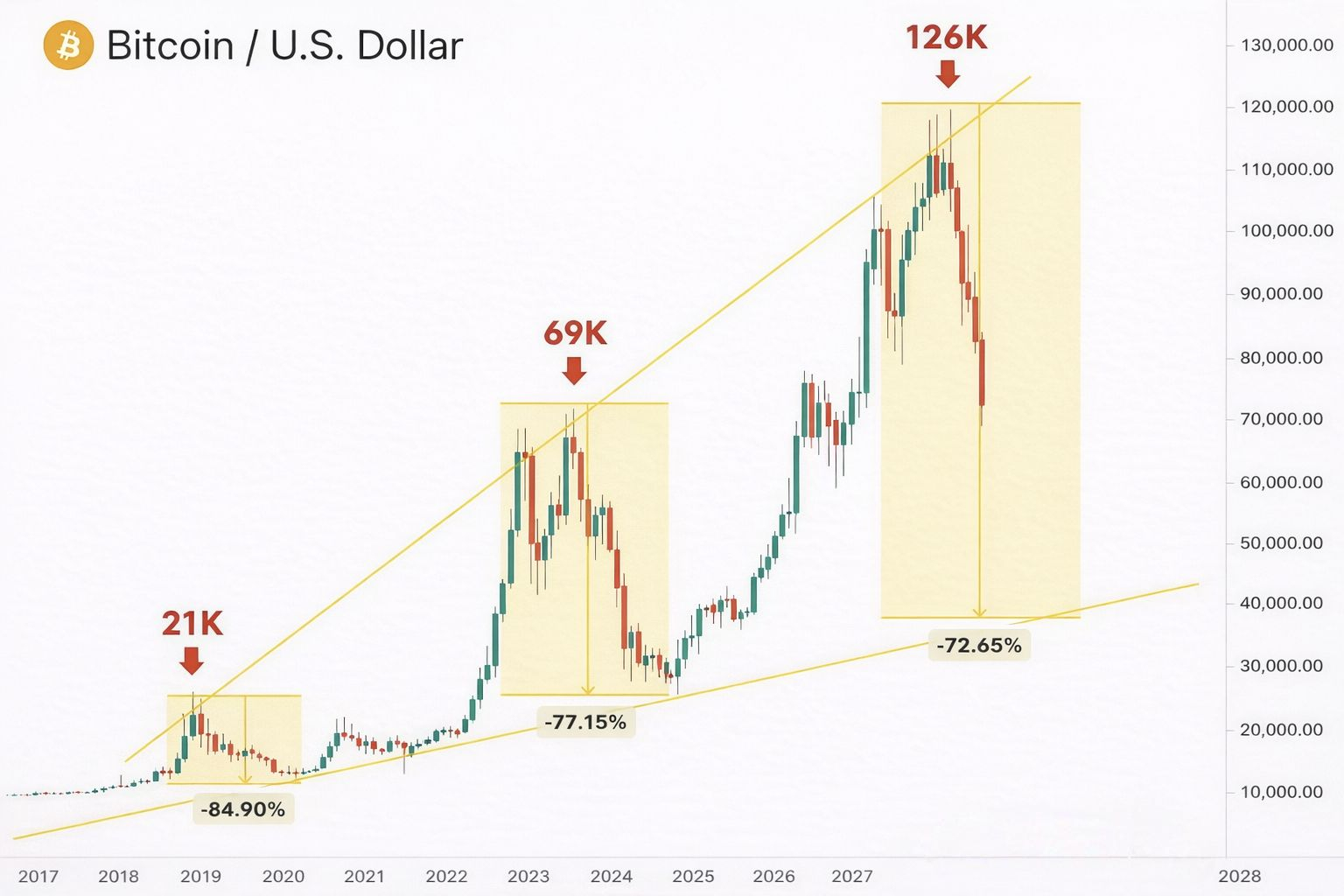
Finally, assess the health of your long-term holdings. According to recent analysis from ZX Squared Capital, Bitcoin remains in a deep bear market with potential for further declines of up to 30% as the four-year cycle gains strength. If your positions are in assets with weak fundamentals or declining network activity, no amount of timing will save them. Cut the losers early. Preserve capital for assets with proven resilience.
-
Verify no single asset exceeds 20% of total portfolio value
-
Confirm 3-6 months of living expenses are in stablecoins or fiat
-
Audit correlations: remove assets that move exactly with the Nasdaq
-
Sell underperforming altcoins with declining active addresses
-
Ensure no leveraged positions remain open without stop-losses
No comments yet. Be the first to share your thoughts!