
dividend stocks 2026
Finding reliable income in 2026 requires looking beyond headline yield. We selected these five high-yield dividend stocks by focusing on sustainable payout ratios and consistent cash flow generation. The goal is to identify companies that can maintain or grow their dividends even if inflation remains sticky or economic growth slows.
Our screening process prioritized businesses with wide economic moats and strong balance sheets. We filtered out companies with payout ratios exceeding 90% of earnings, as those are vulnerable to cuts during downturns. We also looked for a history of consecutive dividend increases, favoring "Dividend Kings" and aristocrats who have proven their ability to return capital to shareholders through multiple market cycles.
These stocks are chosen for their ability to beat inflation over the long term. While yields vary, each company offers a combination of current income and potential share price appreciation. We avoid speculative high-yield traps that often signal underlying business distress. Instead, we focus on established industries like consumer staples, energy, and healthcare, where demand remains relatively inelastic.
5 High-Yield Dividend Stocks to Buy in 2026: Beat Inflation with Passive Income
These five high-yield dividend stocks offer tangible income streams designed to outpace inflation in 2026. We prioritize companies with established payout histories and accessible entry points, focusing on concrete metrics rather than speculative growth.
1. Realty Income monthly dividend trust
Realty Income pays dividends monthly, offering cash flow predictability that standard quarterly payouts cannot match. With over 700 retail tenants, its "Monthly Dividend Company" model provides a steady income stream. Investors benefit from long-term leases with creditworthy tenants, ensuring reliable distributions even during economic fluctuations.

2. British American Tobacco yield strategy
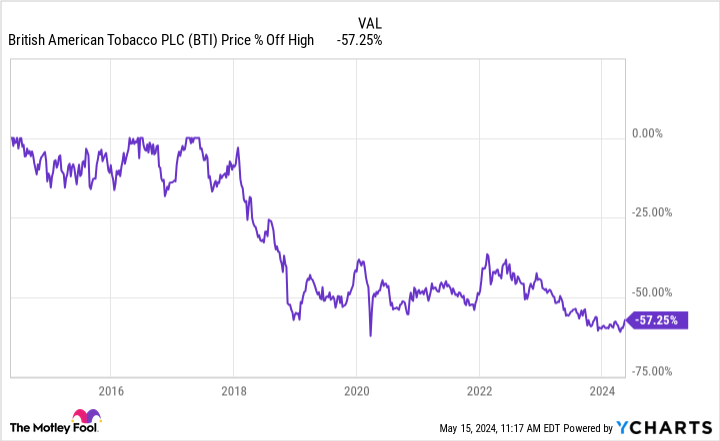
British American Tobacco delivers a high yield by leveraging its global cigarette brand dominance and cost-cutting measures. The company is aggressively shifting toward reduced-risk products, aiming to stabilize earnings despite declining smoking rates. This strategic pivot supports its dividend sustainability, appealing to income investors seeking exposure to the consumer staples sector.
3. Altria Group tobacco dividend stability
Altria Group remains a cornerstone for income-focused portfolios due to its consistent dividend history and strong cash flow from cigarette sales. Despite regulatory headwinds, its diverse holdings in vaping and smoke-free products provide a buffer. The company’s commitment to returning capital to shareholders makes it a reliable choice for those prioritizing stable, high-yield payouts.
4. Verizon Communications wireless cash flow
Verizon generates robust free cash flow from its essential wireless services, supporting a reliable dividend despite heavy capital expenditures. The company’s dual-class share structure and debt management strategies help maintain investor confidence. Its wide network coverage and recurring revenue model make it a defensive play for steady income in volatile markets.

5. Enterprise Products Partners MLP distribution
Enterprise Products Partners offers a high distribution yield driven by its midstream energy infrastructure, including pipelines and storage facilities. As an MLP, it provides tax-advantaged income through K-1 forms, appealing to investors seeking yield. Its fee-based business model minimizes commodity price risk, ensuring stable cash flows regardless of oil or gas volatility.

Pick the right fit
Choosing high-yield dividend stocks requires balancing immediate income with long-term stability. A yield that looks attractive today might signal underlying risk if the company cannot sustain its payouts. Focus on companies with a history of growing dividends through different economic cycles.
Start by checking the dividend history. Look for "Dividend Kings," companies that have increased their payouts for at least 50 consecutive years. These firms, like those listed by Dividend.com, have proven resilience during market downturns. This track record provides a safety net against inflation and volatility.
Next, evaluate the payout ratio. This metric shows what percentage of earnings goes to shareholders. A ratio below 60% for most industries suggests the company retains enough cash to reinvest in growth or weather unexpected expenses. Avoid companies with payout ratios exceeding 90% unless they are regulated utilities or REITs with specific accounting structures.
Finally, consider the sector. Consumer staples and healthcare tend to offer more predictable cash flows than technology or energy. Diversifying across these sectors helps protect your portfolio. Use the comparison below to weigh the tradeoffs between yield, stability, and growth potential for your specific needs.
| Metric | High Yield Focus | Dividend Growth Focus |
|---|---|---|
| Initial Income | High | Lower initially |
| Long-Term Safety | Variable risk | Higher stability |
| Inflation Protection | Limited | Stronger growth |


As an Amazon Associate, we may earn from qualifying purchases.
Frequently asked: what to check next
What are the 10 best dividend stocks to buy now? Morningstar lists Verizon (VZ), Procter & Gamble (PG), Pfizer (PFE), PepsiCo (PEP), McDonald's (MCD), and Medtronic (MDT) among the top ten for 2026. These picks balance high yields with reliable cash flows, though investors should weigh sector-specific risks like telecom competition or pharmaceutical patent cliffs when building a portfolio.
How can I get $1000 a month on dividends? Generating $1,000 monthly requires $120,000 in annual dividend income. At a 4% yield, you would need a $3 million portfolio. Alternatively, targeting higher-yielding stocks like ARMOUR (ARR) or Oxford Square Capital (OXSQ) reduces the capital needed to roughly $600,000–$800,000, but this approach significantly increases exposure to interest rate volatility and credit risk.
What are Warren Buffett's favorite dividend stocks? Warren Buffett favors companies with durable competitive advantages and consistent payout histories. His top holdings include Apple (AAPL), which offers a growing buyback and dividend program, and American Express (AXP). He also holds large positions in Coca-Cola (KO) and Chevron (CVX), reflecting his preference for consumer staples and energy sectors with strong free cash flow.
Which stocks are considered dividend kings for 2026? Dividend Kings are companies that have increased their payouts for at least 50 consecutive years. As of 2026, this exclusive group includes Johnson & Johnson (JNJ), Procter & Gamble (PG), and Coca-Cola (KO). These stocks are often cited as core holdings for investors seeking inflation-beating passive income with lower volatility than high-yield REITs or BDCs.
No comments yet. Be the first to share your thoughts!