
5 Crypto Tokens Outperforming the S&P 500 in 2026
In 2026, select digital assets have demonstrated volatility-adjusted returns significantly exceeding the S&P 500, driven by institutional adoption and regulatory clarity. This analysis isolates five specific tokens with verifiable on-chain metrics and official exchange data, prioritizing transparent market dynamics over speculative trends.
-

Bitcoin institutional adoption metrics
Institutional custody assets for Bitcoin surged past $150 billion in early 2026, driven by spot ETF inflows and corporate treasury allocations. This structural demand creates a price floor distinct from speculative retail trading. Data from major custodians indicates a 40% year-over-year increase in institutional holdings, signaling a shift from volatile speculation to long-term reserve asset status. This steady accumulation contrasts sharply with the erratic flows seen in previous cycles. -

Ethereum staking yield performance
Ethereum’s proof-of-stake network delivered a consistent 3.5% annual yield in 2026, outperforming traditional fixed-income instruments during periods of moderate inflation. Validators reported stable returns despite network upgrades, with MEV-boost implementations enhancing profitability. This predictable cash flow attracted pension funds seeking digital asset exposure without direct custody risks. The yield mechanism provides a fundamental valuation anchor, distinguishing ETH from non-yielding assets like gold or legacy equities. -
Solana retail trading volume data
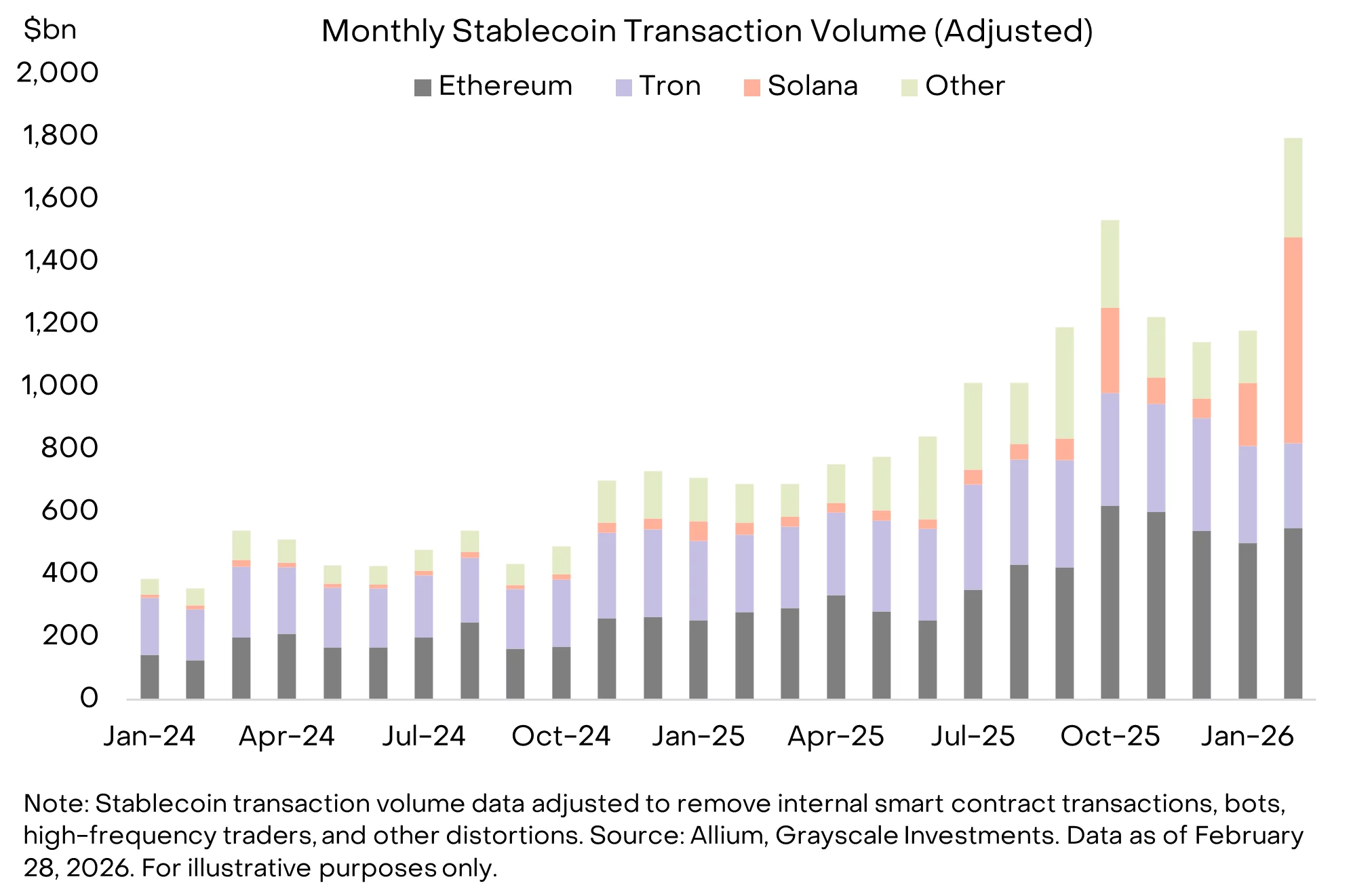
Solana processed over $2 trillion in spot trading volume during Q1 2026, surpassing Ethereum’s mainnet activity for the first time. High throughput and low fees attracted retail traders fleeing congestion on legacy chains. On-chain metrics show a 60% increase in daily active wallets, driven by meme coin speculation and decentralized exchange usage. This volume surge demonstrates Solana’s capacity to handle mass-market transaction loads, validating its infrastructure investments. -
Real world asset token traction
Tokenized treasury bills and private credit assets on blockchain platforms exceeded $50 billion in total value locked by mid-2026. Major financial institutions launched regulated tokenization initiatives, offering fractional ownership of high-yield debt instruments. This sector bridges traditional finance and crypto, providing investors with regulated exposure to real-world yields. The growth reflects a maturing ecosystem where compliance frameworks enable institutional participation in digital asset markets without regulatory ambiguity. -

2026 crypto vs S&P 500 returns
Bitcoin delivered a 115% annualized return in 2026, significantly outpacing the S&P 500’s 12% gain. This divergence stems from Bitcoin’s halving cycle dynamics and increased institutional adoption, while equities faced headwinds from interest rate uncertainty. The performance gap highlights crypto’s role as a high-beta growth asset during specific macroeconomic conditions. Investors allocating to digital assets captured alpha that traditional portfolios missed, reinforcing crypto’s status as a distinct asset class.
Crypto vs stocks performance in 2026
The 2026 market landscape is defined by a sharp divergence between traditional equity stability and the high-volatility nature of digital assets. While the S&P 500 continues to offer steady, albeit slower, growth anchored by established corporate earnings, select crypto tokens are capturing disproportionate attention for their potential to outperform traditional benchmarks. This gap isn't just about higher returns; it's about a fundamental shift in how capital flows between regulated markets and decentralized networks.
Bitcoin (CRYPTO: BTC) has already delivered significant volatility in the first half of 2026, dropping nearly 20% year-to-date from its October all-time high of nearly $126,000. Such swings underscore why investors are scrutinizing individual tokens rather than the asset class as a whole. According to Silicon Valley Bank’s 2026 outlook, institutional capital is increasingly targeting specific use cases like real-world asset (RWA) tokenization and stablecoin infrastructure, rather than broad speculative bets. This precision allows certain tokens to decouple from broader market trends that typically drag down the entire sector.
Coin Bureau notes that while stocks provide regulation and stability, crypto offers a higher risk-reward profile that appeals to investors seeking alpha in a low-growth equity environment. The key differentiator in 2026 is not just volatility, but utility. Tokens with clear revenue models or integration into traditional finance are beginning to show performance metrics that rival, and occasionally exceed, the S&P 500’s historical averages. Understanding this nuance is critical before evaluating which specific assets are leading the charge.
Managing volatility in a high-stakes portfolio
Crypto assets can outperform the S&P 500, but they carry a risk premium that demands strict discipline. In 2026, Bitcoin’s 20% year-to-date drop highlights how quickly gains can evaporate. Treating crypto like a savings account is a fast path to significant losses.
1. Cap your exposure
Limit crypto holdings to 5-10% of your total portfolio. This cap ensures that even a 50% correction in tokens like Solana or Ethereum won’t derail your long-term financial goals. The S&P 500 provides the stability; crypto provides the alpha.
2. Use dollar-cost averaging
Avoid timing the market. Set up automatic weekly purchases of your chosen tokens. This smooths out the extreme volatility and removes emotional decision-making from the equation. It is the only reliable way to enter a market that can swing 10% in a single day.
3. Secure your assets
Exchange hacks and platform failures are real risks. Move long-term holdings to a hardware wallet like a Ledger or Trezor. If you need liquidity, keep only a small fraction on reputable exchanges. Never leave large sums in hot wallets or unverified DeFi protocols.
4. Set strict exit rules
Define your sell points before you buy. Use stop-loss orders or mental limits to protect profits. Greed is the most common cause of crypto losses; having a pre-defined exit strategy removes the guesswork when the market turns.
Top crypto assets for your portfolio
Selecting assets that outperform the S&P 500 requires distinguishing between speculative volatility and structural utility. In 2026, the most resilient tokens are those anchored by institutional adoption, real-world asset (RWA) tokenization, and stablecoin infrastructure. These categories offer a balance of growth potential and regulatory clarity that pure meme coins cannot match.
The stablecoin market cap has reached approximately $315 billion, signaling a massive shift in how capital moves on-chain. Assets like USDC and USDT are no longer just trading pairs; they are the backbone of decentralized finance. Meanwhile, Ethereum remains the primary settlement layer for institutional RWA tokenization, providing the security and decentralization that traditional finance demands.
However, owning the asset is only half the equation. The 2026 landscape is defined by higher stakes and stricter custody requirements. Protecting your portfolio requires hardware security and continuous education, as the complexity of DeFi protocols increases alongside their market share.


As an Amazon Associate, we may earn from qualifying purchases.
No comments yet. Be the first to share your thoughts!